





























Le tueur silencieux : comment un régulateur de tension automatique défectueux détruit vos appareils électroniques
par Megawatts - Mise à jour le 2026-03-24
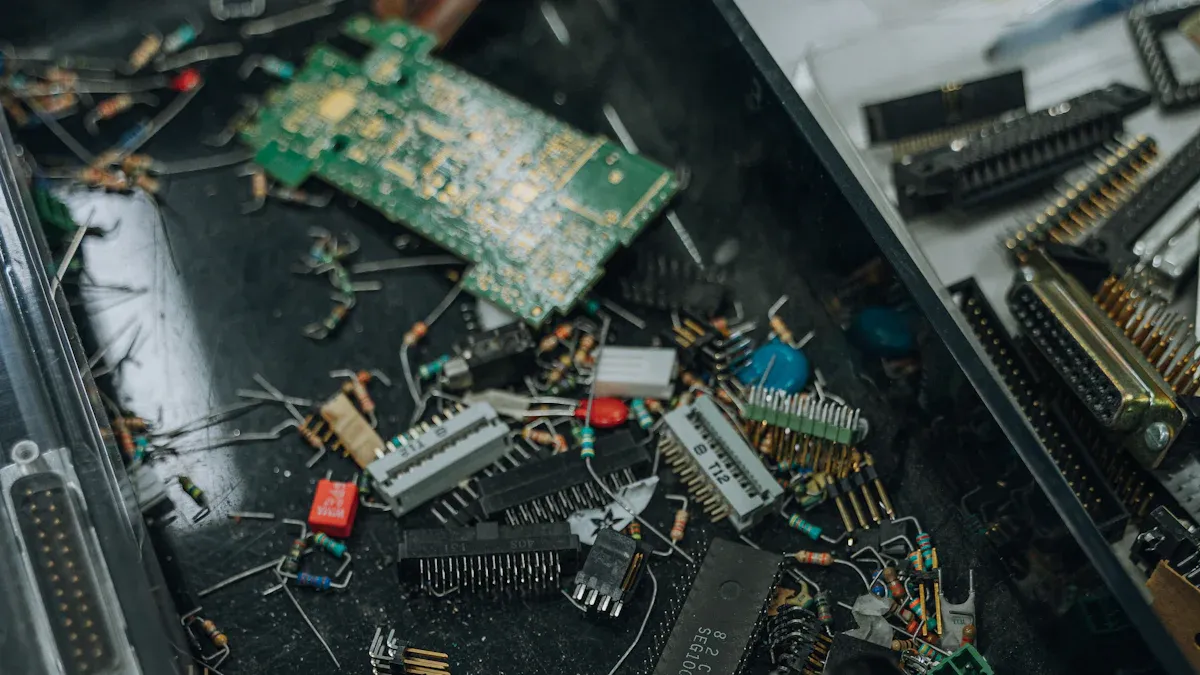
A faulty automatic voltage regulator can quietly wreak havoc on electronics, causing irreversible damage over time. Voltage fluctuations, even minor ones, may lead to overheating and cumulative wear on sensitive components . Studies show that frequent voltage sags or surges accelerate early failure, reducing device efficiency and increasing maintenance costs. Recognizing the first signs of avr malfunction and taking immediate preventive action is essential to protect valuable equipment from lasting harm.
What Is an Automatic Voltage Regulator?
AVR Function and Protection
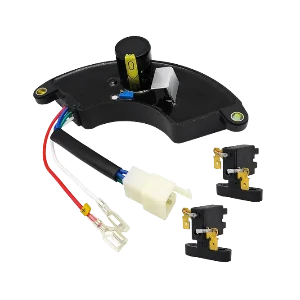
An automatic voltage regulator, often called an AVR, is a critical device in electrical systems. Its main function is to maintain a stable voltage output, even when the input voltage or load conditions change. The AVR achieves this by continuously monitoring the incoming voltage and making real-time adjustments. This process protects sensitive electronics from harmful fluctuations such as surges, sags, and spikes. In generator systems, the AVR automatically adjusts the excitation of the generator to keep the voltage at a consistent level. This ensures that all connected equipment receives the correct voltage, preventing damage and extending the lifespan of valuable devices.
AVRs play a vital role in both residential and industrial environments. They help prevent voltage regulator issues that can lead to equipment failure or reduced efficiency. By stabilizing voltage, AVRs enhance power quality, reduce electrical noise, and minimize downtime. These benefits are especially important in environments where even minor voltage changes can disrupt operations or cause data loss.
Tip: Regularly checking for faulty AVR symptoms, such as flickering lights or inconsistent power, can help identify problems before they escalate.
Devices That Depend on AVRs
Many types of equipment rely on an AVR for stable operation. The following table highlights key industries and the devices that depend on generator voltage regulators:
|
Industry |
Devices/Systems Utilized |
Importance of AVRs |
|
Manufacturing |
CNC machines, robotic arms, automated assembly lines, conveyor systems |
Ensures consistent motor speeds and prevents operational errors due to voltage fluctuations. |
|
Telecommunications |
Data centers, switching stations, fiber-optic networks, cellular towers |
Regulates input voltage to prevent data corruption and maintain service availability. |
|
Water Treatment Facilities |
Pumps, blowers, filtration units, programmable logic controllers (PLCs) |
Protects motors from overheating and ensures accurate control system functionality. |
|
Pharmaceutical Industry |
Equipment for mixing, measuring, sterilizing, and packaging medications |
Maintains precision and consistency in manufacturing and storage processes. |
In addition to industrial applications, AVRs are essential for residential generators. Homeowners depend on a reliable generator voltage regulator to protect appliances and electronics during power outages. AVRs for generators ensure that televisions, computers, and refrigerators receive steady voltage, reducing the risk of damage from sudden changes in power supply.
A well-functioning AVR is the foundation of a dependable electrical system. By understanding its role and monitoring for faulty avr symptoms, users can prevent voltage regulator issues and ensure the longevity of their equipment.
To better understand how the AVR interacts with other critical generator components, it is helpful to explore a broader overview of generator system components and failure prevention strategies , especially when diagnosing complex electrical issues in real-world applications.
AVR Failure and Its Consequences

Common Failure Modes
AVR failure can occur in several ways, each with unique risks for generator systems and connected equipment. Field engineers often encounter these issues during routine maintenance or emergency repair calls. The most frequently reported failure modes in both residential and industrial settings include:
|
Failure Mode |
Description |
Causes |
|
Over-Regulation |
Outputs voltage significantly higher than required (e.g., 260V on a 220V system) |
Worn-out servo motors, failed voltage sensing circuits, degraded transformers, or capacitors |
|
Under-Regulation |
Output voltage drops too low, causing equipment to underperform |
Worn-out servo motors, failed voltage sensing circuits, degraded transformers, or capacitors |
|
Oscillating Regulation |
Voltage swings erratically between high and low levels |
Worn-out servo motors, failed voltage sensing circuits, degraded transformers, or capacitors |
Experienced technical advisors warn that these failure modes often go unnoticed until visible damage or operational disruptions occur. In the field, engineers have reported cases where a faulty AVR led to unpredictable output, causing short circuit events and triggering emergency shutdowns.
Other common causes of AVR damage include:
- Electrical surges from lightning or grid instability
- Degraded internal components due to electrical stress and thermal cycling
- Heat build-up inside the AVR enclosure
- Mechanical damage from vibration or impact
- Circuit overload when the connected load exceeds the AVR’s capacity
- Environmental factors such as humidity and dust
Tip from the field: Regular inspection for signs of overheating, burnt smells, or visible damage can help prevent catastrophic AVR failure and reduce repair costs.
Overvoltage and Undervoltage Risks
When an automatic voltage regulator fails, the generator may deliver output that is either too high or too low. Overvoltage can push sensitive electronics beyond their design limits, while undervoltage can cause devices to underperform or shut down unexpectedly. Both scenarios create significant potential damage for connected systems.
|
Evidence Description |
Impact on Electronics |
|
Sustained voltage instability reduces equipment efficiency and lifespan. |
Both overvoltage and undervoltage can lead to a shorter lifespan for sensitive devices. |
|
Sensitive electronics may suffer permanent damage from overvoltage or brownouts. |
Irreversible damage to devices due to voltage fluctuations. |
|
Voltage regulator failure can cause unpredictable voltage output. |
Unpredictability can lead to equipment damage and operational issues, affecting longevity. |
Power surges and voltage fluctuations are especially dangerous for modern electronics. Field engineers have documented cases where a single surge event, caused by AVR damage, resulted in multiple short circuit failures across an entire facility. In another scenario, undervoltage conditions led to data loss in a telecommunications hub, requiring extensive repair and system recalibration.
Expert Warning: Never ignore flickering lights or intermittent power. These are classic faulty AVR symptoms and may signal underlying voltage regulator issues that require immediate attention.
Impact on Electronics
The consequences of AVR failure extend far beyond immediate equipment shutdowns. Cumulative damage from repeated voltage fluctuations can degrade internal circuits, leading to unpredictable performance and eventual system failure. Sensitive electronics, such as computers, PLCs, and medical devices, are particularly vulnerable to AVR damage.
Common impacts include:
- Equipment damage requiring costly repair or replacement
- Data loss in critical systems
- Safety hazards due to unexpected short circuit events
- Increased downtime and operational disruptions
- Reduced the lifespan of all connected devices
A technical consultant from a major manufacturing plant shared a real-world example: After a period of unnoticed AVR damage, the facility experienced a series of short circuit incidents. The root cause was traced to oscillating regulation, which had gone undetected during routine checks. The resulting repair costs and production losses highlighted the importance of proactive AVR maintenance.
Note: Early detection and timely repair of AVR damage can prevent potential damage to your entire electrical system. Always consult a qualified technician if you suspect AVR failure or observe any signs of visible damage.
Warning Signs of AVR Problems
Flickering Lights and Unstable Voltage
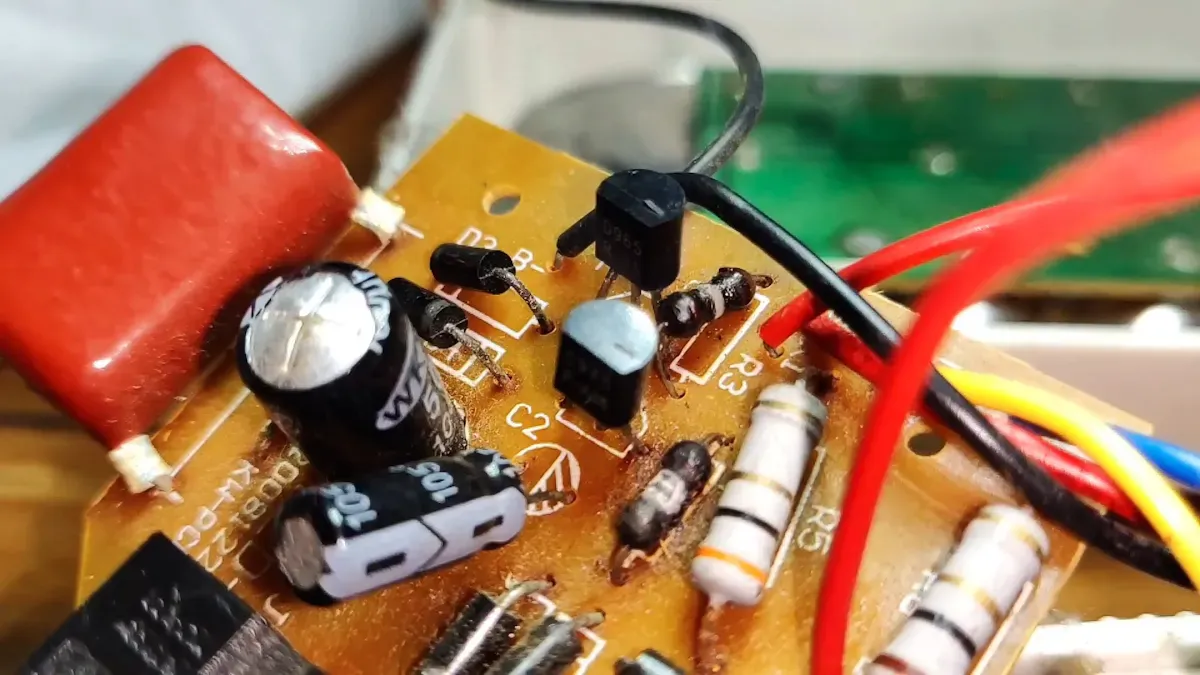
Flickering lights often serve as the first visible indicator of avr issues. Lighting systems react instantly to voltage fluctuations, making them a reliable early warning sign. When an automatic voltage regulator begins to malfunction, short-term voltage instability can cause lights to dim, brighten, or flicker unexpectedly. This symptom points to a momentary loss of voltage control, which may signal deeper electrical instability. In many cases, frequent flickering suggests that the avr is struggling to maintain consistent output, increasing the risk of damage to sensitive electronics. Unstable voltage meter readings and abnormal indicator lights on control panels also point to underlying voltage regulator issues.
- Flickering or randomly dimming lights
- Erratic or unstable voltage meter readings
- Abnormal indicator lights or flashing LEDs
Tip: Address flickering lights promptly to prevent further damage and avoid costly equipment failure.
Overheating and Appliance Issues
Overheating is another critical sign of AVR problems. An AVR that runs hot or emits a burnt smell may be experiencing internal component failure. This condition can lead to a surge or sustained overvoltage, putting connected electronics at risk. Appliances may show signs of failure, such as motors overheating, frequent tripping of circuit breakers, or inconsistent performance. In severe cases, the generator may run but produce no output, indicating a loss of excitation current.]
- Overheating the AVR with a burnt odor
- Equipment damage from low or high voltage
- Frequent circuit breaker trips
- Increased wear or malfunction in connected appliances
Alert: Never ignore overheating or unusual smells from your AVR. These are classic signs of failure that can result in permanent damage.
Diagnosing AVR Failure
Technical advisors recommend a systematic approach to diagnosing avr failure. Begin with baseline voltage measurements and progress through a series of operational tests:
- Measure battery voltage with the engine off; healthy range is 12.6–12.8V.
- Turn the ignition to ON; voltage should remain above 12.0V.
- At idle (700–900 RPM), voltage should read between 13.8–14.4V.
- Engage major accessories; output voltage should stay within ±0.3V of the idle reading.
- Over two minutes at 1800 RPM, maximum voltage should not exceed 15.0V, and minimum should not fall below 13.4V.
- Check field wire continuity; it should read as an open circuit.
Consistent overvoltage, undervoltage, or fluctuating output during these tests confirms avr failure. Early detection of these signs of failure helps prevent extensive damage and ensures the longevity of your generator and connected electronics.
How to Choose the Right Generator AVR Replacement
Selecting the right generator AVR replacement is essential to ensure stable voltage output and long-term protection for your equipment. An incorrect AVR can lead to persistent voltage instability, reduced performance, or even repeated component failure. To avoid these risks, operators should evaluate several key factors before making a decision.
Tout d'abord, vérifiez toujours le modèle et les spécifications du générateur. je Le régulateur de tension automatique (AVR) doit être compatible avec la tension nominale, la fréquence (50 Hz ou 60 Hz) et les exigences du système d'excitation du générateur. L'utilisation d'un AVR incompatible peut entraîner une régulation incorrecte ou un défaut de démarrage.
Deuxièmement, tenez compte de l'environnement d'exploitation. Les groupes électrogènes utilisés dans des applications industrielles, sur des chantiers de construction ou dans des environnements à haute température nécessitent des régulateurs de tension automatique (AVR) plus robustes et stables. Dans ces cas, le choix d'un AVR de haute qualité pour groupe électrogène diesel, offrant une régulation de tension fiable et une bonne résistance à la chaleur, est crucial.
Troisièmement, évaluez la stabilité et la précision de la régulation. Un bon régulateur de tension automatique (AVR) doit maintenir la tension dans une plage de tolérance étroite, même sous des charges variables. Cela permet de protéger les composants électroniques sensibles, tels que les systèmes de contrôle, les automates programmables et les équipements de communication, contre les fluctuations de tension.
Il est également important de vérifier la compatibilité de l'installation et la configuration du câblage. Certains modèles d'amplificateurs audio-vidéo sont conçus pour un remplacement immédiat, tandis que d'autres peuvent nécessiter des ajustements. Consultez toujours le schéma de câblage et assurez-vous d'une connexion correcte afin d'éviter tout problème électrique ultérieur.
Enfin, privilégiez la qualité et la fiabilité du fournisseur. Choisir un fournisseur de confiance est essentiel pour trouver un régulateur de tension automatique (AVR) de remplacement fiable pour votre générateur, garantissant ainsi l'authenticité du produit et sa performance à long terme. Un AVR de remplacement adapté permet non seulement de rétablir un fonctionnement stable, mais aussi de prolonger la durée de vie de l'ensemble de votre installation électrique.
Par exemple, le régulateur de tension automatique AS440 de Stamford est une solution de remplacement couramment utilisée pour les groupes électrogènes Stamford. Il offre une régulation de tension stable et des performances fiables pour les applications industrielles et de secours. Conçu pour être compatible avec des modèles tels que le FPA31, le régulateur AS440 assure un contrôle constant de l'excitation et est souvent choisi par les techniciens pour sa facilité d'installation et son fonctionnement fiable.
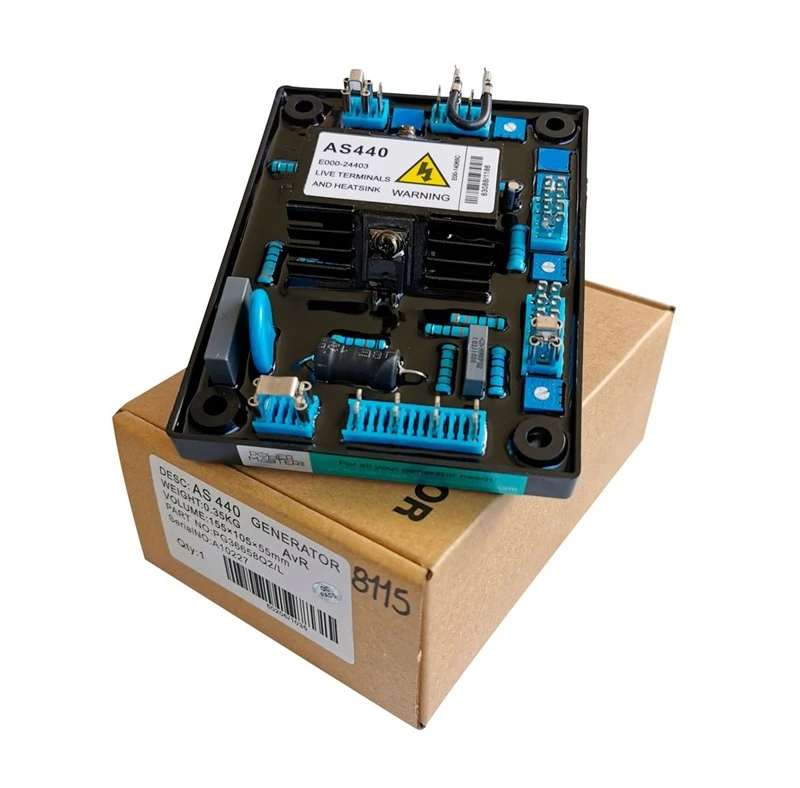
Régulateur de tension automatique AS440 Stamford pour Stamford FPA31
$458.79
Conseil: Si votre générateur a déjà montré des signes d'instabilité de tension, le remplacement précoce du régulateur de tension automatique (AVR) peut éviter des temps d'arrêt coûteux et protéger votre équipement contre des dommages irréversibles.
Remplacement et prévention du régulateur de tension automatique du générateur
Conseils de maintenance et de test
Le remplacement et l'entretien réguliers du régulateur de tension automatique (AVR) du générateur sont essentiels pour prévenir les pannes inattendues et protéger les composants électroniques. Les meilleures pratiques du secteur recommandent d'inspecter régulièrement l'AVR et ses connexions afin de détecter tout signe d'usure ou de surchauffe. Les techniciens doivent effectuer des tests de tension à vide et en charge pour confirmer la stabilité de la tension de sortie dans différentes conditions. La détection de l'instabilité de la tension permet d'identifier les défauts potentiels avant qu'ils ne s'aggravent. L'entretien trimestriel du générateur doit inclure la mesure des tensions d'entrée et de sortie, la vérification du respect des tolérances spécifiées par le régulateur de tension et le contrôle de la bonne fixation de toutes les connexions électriques. Le nettoyage de la poussière et des débris accumulés dans l'AVR et les systèmes de refroidissement prévient également la surchauffe et prolonge la durée de vie du générateur.
Conseil: Toujours inspecter et nettoyer les empilements de thyristors , vérifier les disjoncteurs de terrain et évaluer les systèmes de refroidissement afin de garantir des performances optimales.
Quand remplacer votre amplificateur audio-vidéo (AVR)
Timely generator AVR replacement is critical to avoid costly downtime and irreversible damage. Signs that indicate the need for replacement include operational irregularities, unstable power output, unusual sounds from the generator, and unexpected shutdowns. Physical inspection may reveal wear or damage to the AVR, such as discoloration or bulging components. Both diy avr replacement and professional AVR replacement require careful attention to compatibility and installation procedures. Neglecting replacement can lead to equipment damage, operational downtime, and increased energy costs.
- Regularly inspect the AVR for operational issues.
- Monitor output stability and listen for abnormal sounds.
- Replace the AVR immediately if you observe physical damage or repeated failures.
Choosing Quality Generator AVRs
Selecting a high-quality generator AVR replacement ensures long-term reliability and protection for your generator and connected electronics. If your generator is already showing signs of voltage instability, replacing the AVR early is the most effective way to prevent costly damage. A reliable generator AVR replacement ensures stable voltage output and protects sensitive electronics from long-term wear. Megawatts Parts offers compatible generator AVR solutions for a wide range of generator models, designed for consistent performance and easy installation in both industrial and residential applications.
|
Feature |
Description |
|
Compatibility |
Matches generator specifications for voltage, frequency, and connection types. |
|
Warranty |
Backed by strong warranty terms and customer support. |
|
Easy Installation |
Designed for seamless fit and straightforward setup. |
|
Fast Shipping |
Ensures prompt delivery to reduce downtime. |
|
Advanced Regulation |
Maintains output voltage within tight tolerances for stable operation. |
Note: Regular generator AVR replacement and maintenance extend the life of your generator, prevent major failure, and ensure consistent voltage output for all applications.
A faulty Automatic Voltage Regulator poses serious risks to sensitive electronics, leading to costly voltage regulator issues and equipment failures. Early detection of faulty AVR symptoms, regular maintenance, and timely generator AVR replacement are essential. Industry experts recommend:
- Investing in smart stabilizers with digital displays and built-in protections
- Assessing device requirements and choosing the right AVR for generators
- Scheduling regular maintenance and monitoring indicator lights
|
Feature |
Long-term Benefit |
|
Voltage Regulation |
Extends device life, reduces maintenance costs |
|
Overvoltage Protection |
Shields electronics from damage |
Still experiencing unstable voltage or suspect AVR failure? Choosing the right generator voltage regulator can make a significant difference in protecting your equipment. Explore reliable generator AVR solutions at Megawatts Parts and choose the right voltage regulator for your application today.
Précédent et suivant
-
Article précédent:
 BLOG
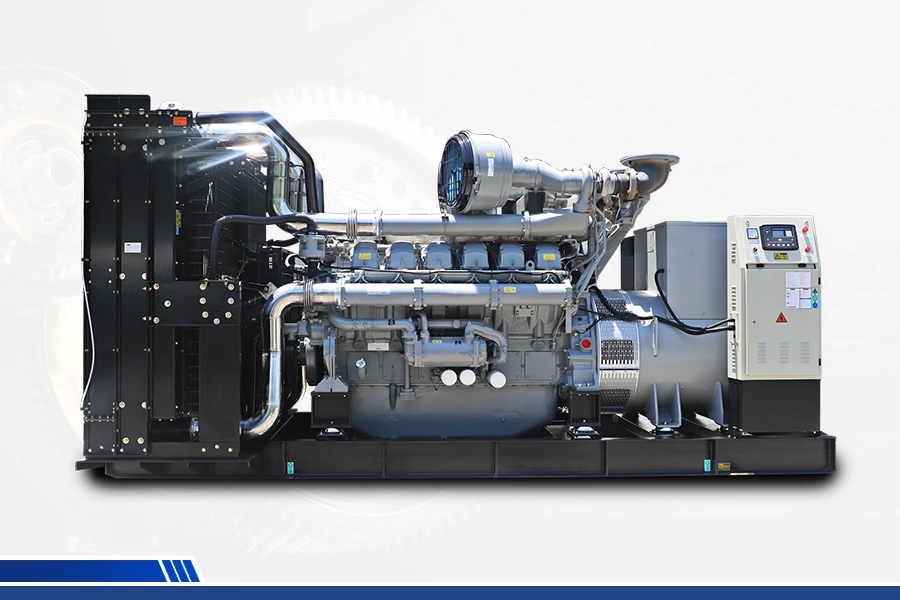
BLOG Blog MegawattsPrésentation des composants d'un moteur dieselPrésentation des composants d'un moteur diesel Un groupe électrogène diesel est un type de groupe électrogène à combustion interne et figure parmi les dispositifs de production d'énergie les...
 -
Article suivant:
 BLOG
Blog MegawattsFS1280 vs FS1040 : Quel séparateur eau/carburant Fleetguard protège le mieux vos injecteurs ?Lorsqu'on compare les séparateurs eau/carburant Fleetguard FS1280 et FS1040, il est essentiel de comprendre leurs principales différences pour protéger son moteur diesel. Ces deux filtres sont coura...
BLOG
Blog MegawattsFS1280 vs FS1040 : Quel séparateur eau/carburant Fleetguard protège le mieux vos injecteurs ?Lorsqu'on compare les séparateurs eau/carburant Fleetguard FS1280 et FS1040, il est essentiel de comprendre leurs principales différences pour protéger son moteur diesel. Ces deux filtres sont coura...
En savoir plus
-
 BLOG
Blog MegawattsApprovisionnement stratégique : Comment créer un catalogue de pièces détachées standardisé pour groupes électrogènes destinés à des parcs mixtesLa gestion d'un parc mixte de groupes électrogènes Cummins, Perkins et Caterpillar engendre souvent des pertes financières occultes dues à la duplication des stocks et à la fragmentation des approvi...
BLOG
Blog MegawattsApprovisionnement stratégique : Comment créer un catalogue de pièces détachées standardisé pour groupes électrogènes destinés à des parcs mixtesLa gestion d'un parc mixte de groupes électrogènes Cummins, Perkins et Caterpillar engendre souvent des pertes financières occultes dues à la duplication des stocks et à la fragmentation des approvi... -
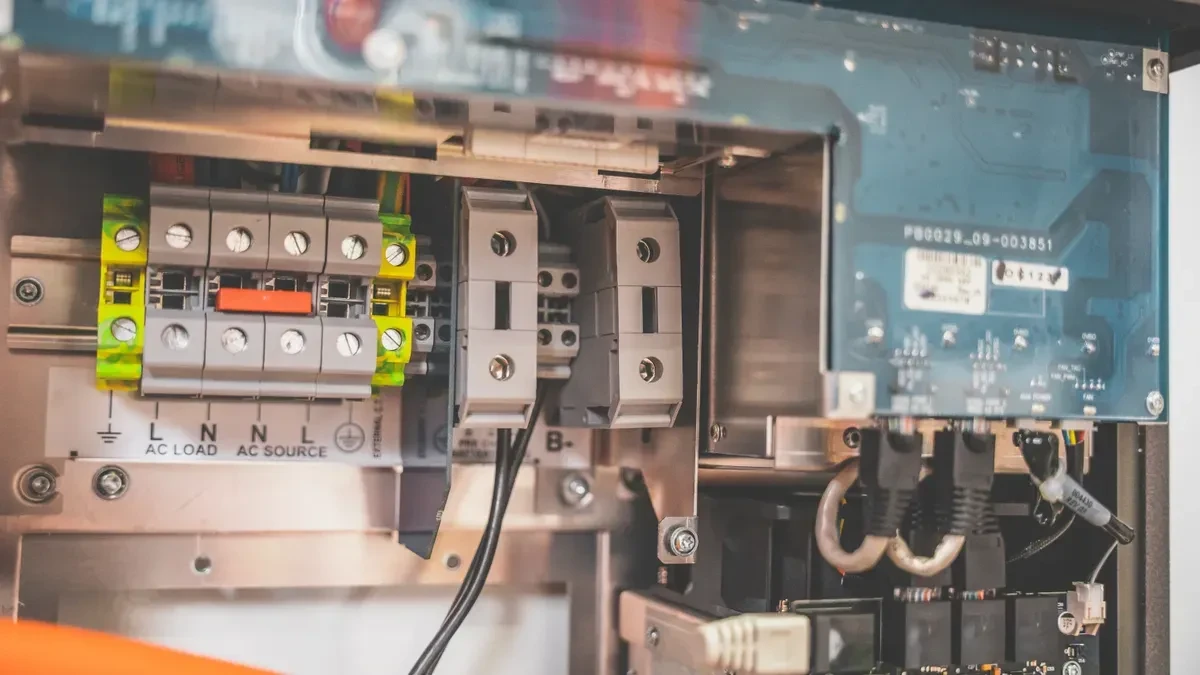 BLOG
Blog MegawattsGénérateur diesel ne démarre pas : Liste de contrôle étape par étape pour le diagnostic électrique (à destination des mécaniciens)Lorsqu'un groupe électrogène diesel ne démarre pas, vérifiez d'abord le système électrique. Ne cherchez pas encore de panne d'alimentation ou un problème mécanique. Une tension de batterie faible et...
BLOG
Blog MegawattsGénérateur diesel ne démarre pas : Liste de contrôle étape par étape pour le diagnostic électrique (à destination des mécaniciens)Lorsqu'un groupe électrogène diesel ne démarre pas, vérifiez d'abord le système électrique. Ne cherchez pas encore de panne d'alimentation ou un problème mécanique. Une tension de batterie faible et... -
 BLOG
Blog MegawattsDégradation de la bobine magnétique : pourquoi l’électrovanne d’arrêt de votre moteur diesel tombe en panne sous l’effet de la chaleur extrêmeLa chaleur extrême est le principal ennemi d'un solénoïde d'arrêt moteur diesel. Elle dégrade l'isolation électrique à l'intérieur de la bobine magnétique, ce qui augmente la résistance et provoque...
BLOG
Blog MegawattsDégradation de la bobine magnétique : pourquoi l’électrovanne d’arrêt de votre moteur diesel tombe en panne sous l’effet de la chaleur extrêmeLa chaleur extrême est le principal ennemi d'un solénoïde d'arrêt moteur diesel. Elle dégrade l'isolation électrique à l'intérieur de la bobine magnétique, ce qui augmente la résistance et provoque... -
 BLOG
Blog MegawattsLe coût caché des stocks périmés : durée de conservation et stockage approprié des kits de joints en caoutchoucUn kit de joints d'étanchéité reste inutilisé pendant cinq ans. Vous l'avez payé. Il vous faut maintenant payer pour vous en débarrasser. En cas de panne, vous payez un supplément pour un remplaceme...
BLOG
Blog MegawattsLe coût caché des stocks périmés : durée de conservation et stockage approprié des kits de joints en caoutchoucUn kit de joints d'étanchéité reste inutilisé pendant cinq ans. Vous l'avez payé. Il vous faut maintenant payer pour vous en débarrasser. En cas de panne, vous payez un supplément pour un remplaceme...
Abonnez-vous pour bénéficier de 10 % de réduction.
Restez informé(e) des nouveaux produits et des promotions

Contactez-nous
-
BUREAU DE VENTES EN CHINE : n° 2-11, n° 8, route Gaotai, zone d'investissement de Gaishan, district de Cangshan, Fuzhou, Fujian
-
USINE D'ARABIE SAOUDITE : 7264 Shakra, Al Faisaliyyah, REFB3035, 3035, Riyad 12883
-
BUREAU DE VENTE EN RUSSIE : 127282, Moscou, district municipal de Severnoe Medvedkovo, rue Polyarnaya, 31V, Bldg. 1, Locaux 1/2
-
BUREAU DE VENTE DE COLOMBIE : 92-32 26th Street, 03-118, Bogota
-
USINE NIGERIA : Terrain 5, avenue Chivita, domaine Ajao, Isolo Lagos
-
E-mail:sales@megawattsparts.com
Suivez-nous


Copyright â © 2025 Megawatts Tous droits réservés.


Sélectionnez le bouton Précédent ou effectuez une recherche directement dans la barre de recherche !
Tout acheter
 French
Devise: <{ pagedata.current_currency }>(<{ pagedata.current_currency_code }>)
Êtes-vous au bon endroit ?

Vous acceptez les conditions d'utilisation de MegaWatts.com Conditions d'utilisation et politique de confidentialité En vous abonnant, vous pourrez recevoir des courriels contenant des conseils utiles, des promotions et des offres.
Non, merci. Je préfère payer le prix fort.